
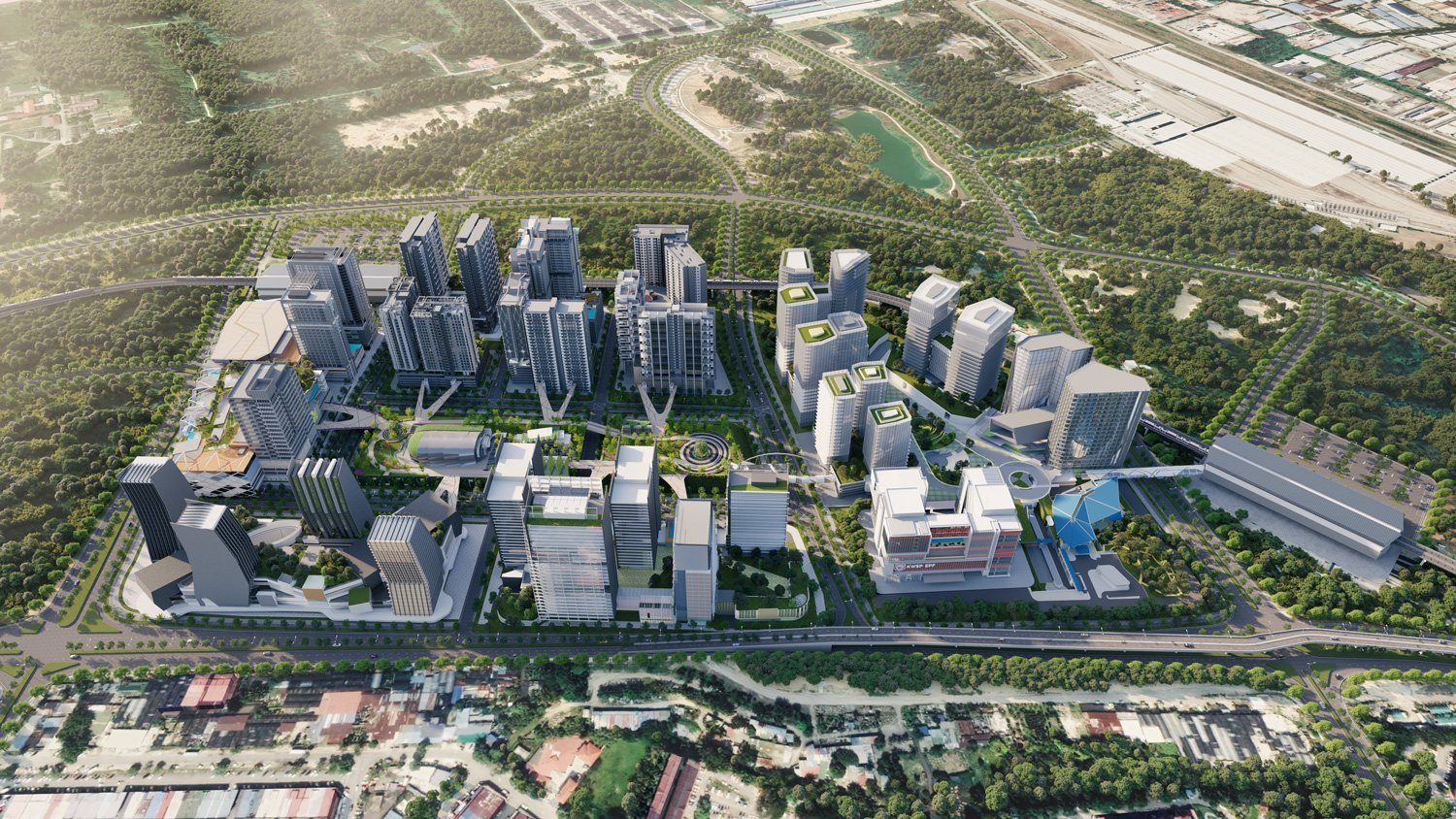
If you've been house-hunting in the Klang Valley lately, you've probably noticed the name "Kwasa Damansara" popping up again and again — on new launches, on the MRT map, in the news. A few years ago it was mostly empty former rubber land. Today it's one of the most talked-about growth areas in Selangor, with several major developers launching at once. So what is it, where exactly is it, and why is everyone suddenly building — and buying — here? Here's a plain-English, properly sourced rundown.
Kwasa Damansara at a glance
- LocationSungai Buloh, Selangor (Damansara/PJ north corridor)
- Master developerKwasa Land Sdn Bhd (an EPF subsidiary)
- Land area~2,330 acres, former RRIM land
- Gross development valueAround RM50 billion
- Build-out~20–25 years from 2015
- Planned populationUp to ~290,000 residents
- Homes~28,000, incl. ~11,000 affordable
- TransitDual-MRT interchange (Kajang & Putrajaya lines)
Where is Kwasa Damansara, actually?
Kwasa Damansara sits in the northern corridor of the Klang Valley, in Sungai Buloh, on land that used to belong to the Rubber Research Institute of Malaysia (RRIM). Despite the "Sungai Buloh" address, it's wrapped by some of the most established and affluent suburbs in the country — Kota Damansara, Mutiara Damansara, Bandar Utama, Ara Damansara and Petaling Jaya are all next door. The township is large enough to straddle two local councils, the Shah Alam City Council (MBSA) and the Petaling Jaya City Council (MBPJ).
That location is the whole point. Instead of opening up a far-flung greenfield an hour from the city, Kwasa Damansara drops a brand-new, master-planned township into the middle of mature Damansara — close to established malls like 1 Utama, The Curve, IKEA Mutiara Damansara and IOI Mall Damansara, and to schools, hospitals and offices that already exist. You get "new township" upside with "old neighbourhood" convenience around it.
Who's behind it — and why that matters
The master developer is Kwasa Land Sdn Bhd, a wholly owned subsidiary of the Employees Provident Fund (EPF) — Malaysia's national retirement fund. That's an unusually strong pedigree. Kwasa Land's job isn't to build every block itself; it lays down the main roads, utilities, parks and master plan, then releases individual parcels to partner developers who build to the master layout.
Why does that matter to a buyer? Because a township master-planned and bankrolled by the EPF carries very little risk of being abandoned halfway, and the planning tends to be long-term and disciplined rather than piecemeal. The stated vision is a "green, connected, inclusive" next-generation township — one of the greenest in the Klang Valley — anchored by a 7.5 km, roughly 160-acre linear park, with a deliberate mix of housing that includes around 11,000 affordable homes out of some 28,000 planned. The EPF also moved its own headquarters, Menara KWSP, into the township, which tells you how committed the fund is to the address.
Why is so much suddenly happening here?
For years, Kwasa Damansara was more plan than place. What changed is that the groundwork finished and the parcels started going out to developers — so 2025 and 2026 are when it all becomes visible at once. A few milestones explain the burst of activity:
- The EPF headquarters landed first. Menara KWSP was completed and officiated, anchoring the township with thousands of daily workers and signalling the fund's commitment.
- The city centre (MX-1) is moving. The 64-acre town centre — the new central business district for the township — is being developed by MRCB together with Kwasa Land, weighted heavily toward commercial, offices, retail and its own MRT station.
- Big residential parcels have been awarded. In 2025, LBS Bina signed development rights for around 192 acres in the "PJ West" precinct (an ~RM8.3 billion, phased plan). In 2026, Kwasa Land and ParkCity Group partnered on more than 400 acres at the south-eastern "PJ East" corner — over 9,000 homes of landed and high-rise — the precinct that includes Zenia @ ParkCity Damansara.
- Independent developers are launching too. Projects such as D'Evia Residences (by EXSIM) are already selling directly beside the transit spine.
Put simply: after a decade of planning, the master developer opened the floodgates on land, and several credible builders are now launching in the same window. That's why it feels like Kwasa Damansara "took off" overnight when in reality it's been coming for years.
The connectivity story
Transit is Kwasa Damansara's single biggest advantage, and it's a rare one. The township is built around the MRT, and Kwasa Damansara station is an interchange between two lines — the MRT Kajang Line and the MRT Putrajaya Line — with a second station, Kwasa Sentral, serving the township as well. Being on an interchange, not just a single line, means one-seat or one-change rides to a huge swathe of the Klang Valley, from Mont Kiara-adjacent areas down to Putrajaya and Cyberjaya. A multi-storey park-and-ride is planned at the main station too.
On the road side, the township is ringed by no fewer than five major highways — including the Guthrie Corridor (GCE), NKVE, DASH, LDP and Sprint/Penchala Link — so even if you drive, you're plugged straight into the wider expressway network. That combination of dual-MRT plus five highways is exactly what makes a transit-oriented township like this so attractive to both own-stay buyers and investors.
Why people are buying into Kwasa Damansara
When buyers ask me why they should look here rather than a ready condo elsewhere, it usually comes down to four things:
1. Scarcity. Kwasa Damansara is one of the last large, contiguous tracts of developable land left in the Klang Valley. Big land in a central location doesn't come along often, and that scarcity underpins the long-term value story.
2. The EPF factor. A master developer owned by the national retirement fund is about as credible and well-capitalised as it gets. Buyers read that as low abandonment risk and long-term commitment to getting the township right.
3. Connectivity. A dual-MRT interchange plus five highways, wrapped by mature Damansara amenities, is a genuinely strong location — the kind that keeps homes rentable and liquid.
4. Early-mover upside. Buying into a well-planned township early — before the city centre, parks and community are fully built — is the classic capital-growth play. It's the same logic that rewarded early buyers in places like Bangsar South, Mont Kiara and KL Eco City.
The honest pros and cons
No area is all upside. Here's the balanced view I give buyers before they commit:
Pros
- EPF-backed master developer — credible, well-funded, low abandonment risk
- Dual-MRT interchange plus five highways — rare, best-in-class connectivity
- One of the last big land banks in the Klang Valley — real scarcity value
- Master-planned and green — a 7.5 km linear park and disciplined layout
- Surrounded by mature, affluent Damansara suburbs and existing malls
- Reputable plot developers (MRCB, LBS, ParkCity, EXSIM) building to one plan
- Early-mover potential as the township matures over the next decade
Cons & what to watch
- It's early — a 20–25 year build, so today it's still largely a construction site
- Amenities and "community feel" arrive in phases, not on day one
- Most launches are off-plan — you're buying a forward story, not a ready home
- Tenure varies by parcel (some freehold, some leasehold) — check each unit
- The city centre is commercial-heavy, so central residential supply is limited
- Simultaneous construction means dust, detours and traffic during build-out
- Pricing has firmed as the story matured — you're not buying at "greenfield" prices
How to buy well in Kwasa Damansara
Match the precinct to your goal. The township has distinct pockets — the commercial MX-1 city centre, the PJ West and PJ East residential precincts, and parcels right on the transit spine. A yield-focused investor and a growing family who wants a landed home should be looking at very different parcels.
Check title and tenure per project. Because parcels differ, don't assume — confirm whether the specific unit is freehold or leasehold, as it affects financing and resale. If that distinction is new to you, my leasehold vs freehold guide walks through it.
Mind the completion horizon. Some launches here won't hand over for several years, and the surrounding conveniences arrive in stages. Be honest with yourself about whether you're buying to live now or to hold for the township's growth.
Compare the launches. Several projects are selling at once. Entry price, tower, facing, developer track record and hand-over timing all differ — so it pays to weigh them side by side rather than buying the first show unit you visit.
The bottom line
Kwasa Damansara is one of the more genuinely significant things happening in Klang Valley property right now — a brand-new, EPF-master-planned township, on a dual-MRT interchange, dropped into the middle of established Damansara. For a buyer with a medium-to-long horizon, the ingredients for capital growth are unusually well aligned: scarcity, connectivity, credible developers and a disciplined master plan. The catch is simply timing — this is an early-stage township, so you're buying into a plan that will take years to fully arrive, and you should pick your precinct, tenure and completion date with your own goals firmly in mind.
If you're weighing a launch in Kwasa Damansara — Zenia, D'Evia or anything else in the township — send me your budget and what you're trying to do, and I'll give you an honest read on which precinct and project actually fit.
Sources & further reading
- Kwasa Land / Kwasa Damansara — official site & master plan
- EdgeProp.my — Kwasa Damansara township on the move (2026)
- The Edge Malaysia — cover story: from master plan to reality
- The Edge Malaysia — Kwasa Land & ParkCity Group PJ East (9,000 units)
- Wikipedia — Kwasa Damansara overview
Figures and dates reflect what these sources reported at the time of writing and may change as the township progresses. This article is general information, not financial or investment advice — always confirm current details with the developer or a licensed agent.