
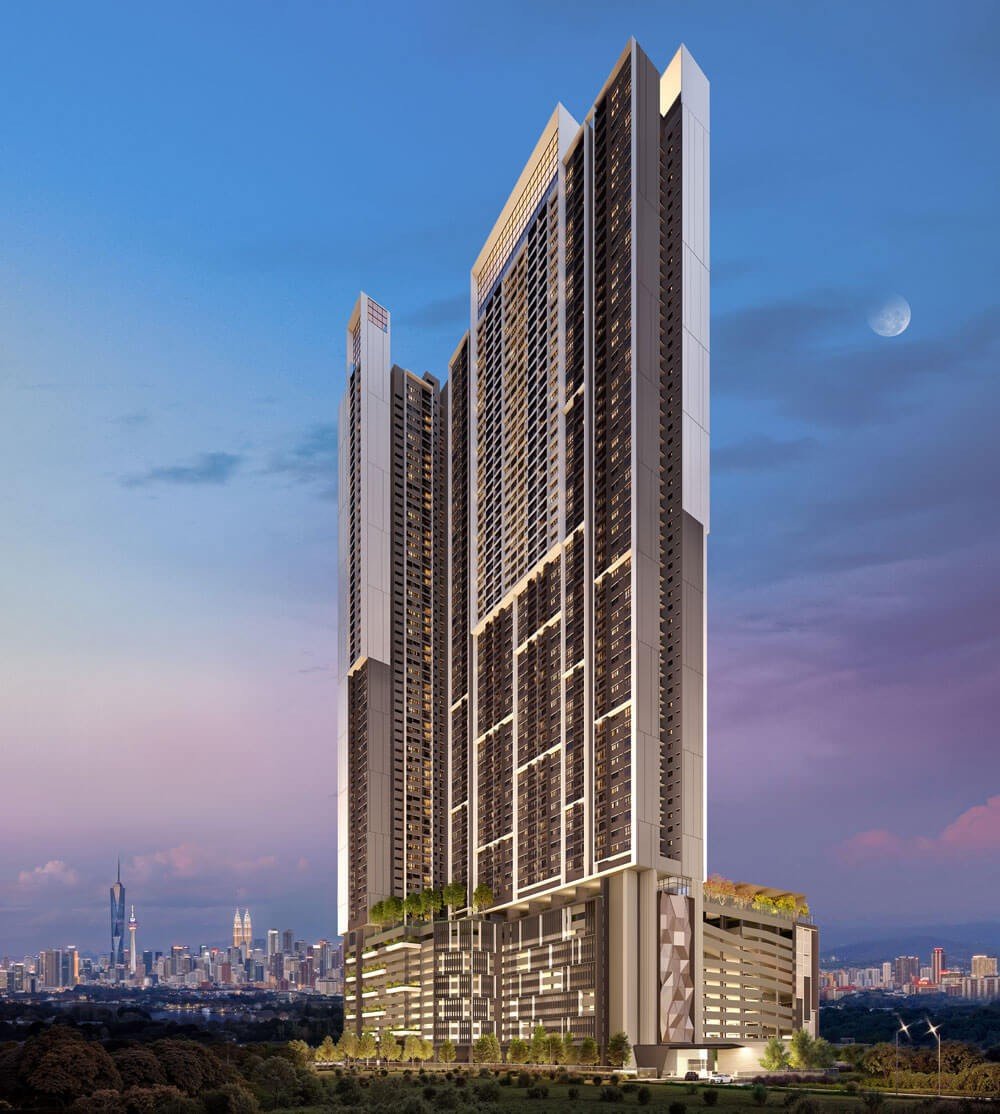
Ask most KL buyers to name an "up-and-coming" area and they'll reach for Bukit Jalil, Bangsar South or the TRX fringe. Taman Desa almost never makes that list — and that's exactly why it deserves your attention. It's one of those rare inner-city pockets that has quietly done everything right for fifty years without ever becoming fashionable. For a 2026 buyer, that unfashionability is the opportunity.
Here's my honest case, as an agent, for why Taman Desa is worth a serious look right now.
Where Taman Desa actually is (and why that matters)
Taman Desa sits just off Jalan Klang Lama and the East-West Link Expressway, on the border between Kuala Lumpur and Petaling Jaya. That location is the whole story. You're roughly 10-15 minutes from the city centre and about 5 minutes from Mid Valley Megamall and The Gardens Mall — two of the busiest retail and F&B hubs in the country — yet you're tucked into a leafy, elevated residential estate lined with mature trees. It's inner-city convenience without inner-city noise.
Built from the early 1970s, this is a genuinely mature township: schools, clinics, banks, a medical centre, a fire station and a deep, well-loved hawker food scene are all already here — not "coming in a future phase." That kind of settled infrastructure takes thirty years to grow, and Taman Desa has had it for decades.
The short version: you're buying an established, central address at a suburban price.
The prices: central location, non-central pricing
This is where Taman Desa gets interesting. In early 2026, Taman Desa condominiums transact at a median of roughly RM410 per sq ft, with most units priced between about RM320,000 and RM680,000 depending on age and size. Newer blocks sit closer to RM450-700 psf, and premium new launches near the Pantai corridor push toward RM750-900 psf.
To put that in perspective: Kuala Lumpur's overall median is around RM577 psf. So Taman Desa trades at roughly 28-30% below the KL median — while sharing the same employment hubs, malls and hospitals as pricier neighbours like Bangsar, Mid Valley and KL Eco City just next door. You're paying a suburban premium for a location that is, in practice, central.
On the rental side, condos here typically fetch around RM2,000 to RM3,600 a month (roughly RM2.2-3.1 psf). Yields are moderate rather than spectacular — this is a liveable, owner-occupier neighbourhood first, and an investor play second. That's a feature, not a bug: owner-occupier areas hold value far more steadily than speculative ones.
The growth case: scarcity is the secret
Here's the part most buyers miss. Taman Desa is almost entirely built out. There's very little developable land left, which means very little new supply — and scarcity is one of the most reliable drivers of long-term price growth in property.
Independent market forecasters have started to notice. Established, low-turnover KL neighbourhoods where supply is structurally constrained — Taman Desa is named specifically — are projected among the stronger performers over the next five years, with cumulative growth potential meaningfully ahead of the city's blended average. The logic is simple: when nobody can build more, existing homes in a proven location become the only way in.
Two catalysts add to that. First, the new direct link to the KL-Seremban Expressway being built into the latest launches makes the area even more accessible. Second, the MRT3 Circle Line (expected around 2032) will eventually improve rail access across this corridor. Neither is fully priced in yet.
The honest trade-offs
I'd be doing you a disservice if I only sold you the upside. Two things to weigh carefully:
Traffic
Taman Desa's access roads are limited, and peak-hour congestion is the number-one local grumble. The main roads (Jalan Desa Bakti, Jalan Desa Utama, Jalan Desa Mesra) have been widened to help, and the new highway link will ease it further — but if you commute at rush hour, drive the route first.
Rail isn't at your doorstep
This is a car-first area. KTM Seputeh is about 1.7km away and the nearest LRT/MRT stations are a few kilometres out. Some newer projects offer a shuttle to the nearest MRT, which helps, but if walk-to-train is non-negotiable for you, Taman Desa won't tick that box until MRT3 arrives.
One more technical note: most of the newer high-rises here are leasehold, and some are serviced apartments on a commercial title (which means commercial utility and assessment rates). Always check the tenure and title of the specific project — it varies.
Who Taman Desa is really for
In my experience it suits three buyers best:
- Families who want established schools, greenery and space, at a lower entry price than Bangsar or Mont Kiara.
- City professionals who work around Mid Valley, KL Sentral, Bangsar or the CBD and want a short, flexible drive home.
- Long-term value buyers who understand that scarce supply in a mature, central location is a quietly powerful combination.
It's a weaker fit if you're a pure yield investor chasing transit-oriented rental demand, or if you refuse to own a car.
The new launches worth knowing
Because land is so scarce, new Taman Desa launches tend to move quickly. Two are worth having on your radar right now, and they're deliberately different from each other:
- The Atas — a low-density development with large, "semi-D in the sky" family layouts (1,156-1,518 sq ft) and a residential title. This is the one for space and privacy.
- M Aspira — Mah Sing's efficient, facility-rich towers (706-1,006 sq ft) with a resort-style deck and a brand-new direct link onto the KL-Seremban Expressway. This is the accessible, lifestyle-led entry point.
Between them they cover both ends of the Taman Desa buyer spectrum — and I'm happy to walk you through how they stack up on price, tenure and layout.
So, should you buy in Taman Desa?
If you're buying to live in and you own a car, Taman Desa is one of the easiest "yes" calls in KL right now: mature, central, leafy, and priced well below what its location deserves. If you're buying to invest, the case is quieter but still real — moderate yields, but genuine scarcity and steady owner-occupier demand that protect your capital. Either way, the specific project and unit matter enormously, and that's exactly the kind of thing worth a quick chat before you commit.
If you found this useful, you might also like my honest take on whether Bukit Jalil is still worth buying into in 2026.