
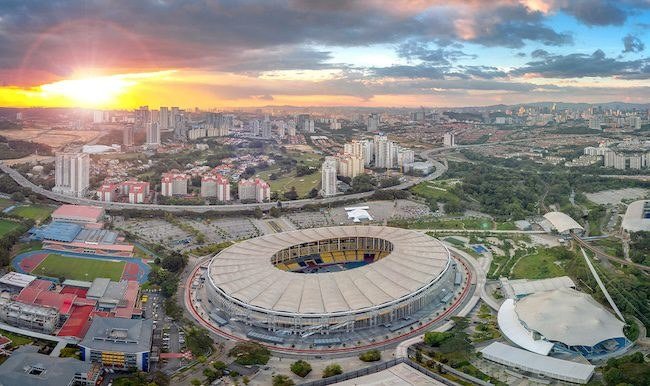
If you've driven past Bukit Jalil in the last couple of years, you've probably seen a very large construction site rising near Pavilion Bukit Jalil and wondered what it is. That's KL Wellness City — one of the most ambitious mixed-use projects in the Klang Valley, and something genuinely different from the usual condo launch. Here's a plain-English, properly sourced rundown of what it actually is, what's being built, when, and what it means if you're thinking about property in or around Bukit Jalil.
KL Wellness City at a glance
- LocationBukit Jalil, Kuala Lumpur
- DeveloperKL Wellness City Sdn Bhd
- Land area~26.49 acres, seven plots
- Gross development valueMore than RM11 billion
- ConceptSE Asia's first integrated healthcare & wellness city
- Anchor624-bed international tertiary hospital
- Phase 1Hospital + The Nobel Healthcare Park
- Full completionEnvisaged around 2032
So what exactly is KL Wellness City?
KL Wellness City (KLWC) is billed as Southeast Asia's first purpose-built, fully integrated healthcare and wellness township. Instead of a shopping mall or a park at its centre, the whole development is organised around health — a full tertiary hospital, medical specialist suites, wellness residences for recovery stays, healthcare-company offices, a retirement resort, serviced apartments, a central park and retail, all in one place. The idea, in the developer's words, is a "360-degree wellness hub" where living, working, healthcare and green space sit side by side.
It's built by master developer KL Wellness City Sdn Bhd, led by managing director Dato' Dr Colin Lee, with Dato' Sri Vincent Tiew heading branding, sales and marketing. The project has picked up industry recognition along the way, including a Best Mixed-Use Development (Asia) award at the Asia Property Awards 2022 and a health-and-wellness category win at the StarProperty Awards 2023.
Where it sits — and why Bukit Jalil
KLWC is in Bukit Jalil in southern KL, inside the International Zone of the Kuala Lumpur Master Plan, and only about 300 metres from Pavilion Bukit Jalil. That's a deliberately strong location: it's a mature, established township with a ready population, next to Bukit Jalil National Stadium and KL Sports City (Axiata Arena), Technology Park Malaysia and the Bukit Jalil Recreational Park, with several universities and colleges nearby.
Connectivity is one of Bukit Jalil's biggest selling points. The area is on the LRT Sri Petaling Line — with Bukit Jalil, Awan Besar and Sri Petaling stations serving the neighbourhood — and it's plugged into a web of highways including KESAS, MEX, the Bukit Jalil Highway, the North–South Expressway, Besraya, the LDP and SILK. KL International Airport is roughly 45 minutes away, which matters a lot for a project aiming squarely at medical tourists.
The numbers: scale, value and timeline
The whole development spans about 26.49 acres across seven plots, with a gross development value reported at more than RM11 billion and full completion envisaged around 2032 — so this is a long-horizon, phased build, not a single launch. The developer's stated approach is unusual: build the hospitals first, then roll out the residential and lifestyle components afterwards. Construction on the site began back in the second half of 2021, and the project was officially launched in 2023.
The anchor: Kuala Lumpur International Hospital (KLIH)
The centrepiece is a tertiary hospital — the Kuala Lumpur International Hospital, also referred to as the International Tertiary Hospital at KL Wellness City. It has been approved as a 624-bed facility, scalable up to 1,000 beds, with around 25 operating theatres, and it's designed with Centres of Excellence in areas such as cardiology, spine health, neurology, sports medicine, cosmetic surgery and fertility, backed by innovation labs and clinical R&D.
On timing: as of early 2025 the hospital was reported to be around 40% complete, with completion targeted for roughly the second quarter of 2026 and an opening in the second half of 2026. As with any project of this size, dates can move, so treat the opening window as a target rather than a promise and check the current status directly.
The Nobel Healthcare Park
Alongside the hospital, and physically linked to it by a bridge, sits The Nobel Healthcare Park — the first phase that's furthest along. It's been reported to comprise 379 medical specialist suites (in two blocks), 512 wellness suites (in one block), business suites, Malaysia Digital–designated office space, and ground-floor F&B and healthcare retail. Shared facilities reported for the park include a swimming pool, sauna, a sky gymnasium and sky lounge, and a landscaped courtyard with jogging and cycling tracks. The whole thing is pitched as a one-stop ecosystem, from diagnosis through to rehabilitation, and is being built to Green Building Index standards.
The three suite types serve different buyers. Medical suites are aimed at doctors and healthcare practitioners who want to run their practice next to the hospital. Business suites target healthcare-related companies. Wellness suites are compact, wheelchair-friendly, hospitality-managed residences designed for short recovery stays — the developer appointed a hospitality operator to run them, targeting the large share of international healthcare travellers who come to Malaysia each year.
What about pricing?
Because this isn't a standard residential launch, pricing is worth understanding carefully. From publicly reported figures: medical suites were reported at roughly RM1,500 psf on average (broadly around RM800,000 to RM1.2 million), with the wellness suites — in compact layouts of about 268 and 386 sq ft — reported from around RM1,300 psf, with studio units reported from about RM366,000 and larger commercial suites from about RM432,000. Take-up was reported as strong early on, with medical suites around 75% booked and wellness suites around 70% at one point.
Those numbers are drawn from press coverage over the project's launch period, so treat them as a guide to the ballpark rather than today's live price list — always confirm current pricing, remaining availability and package terms with the developer or an agent before you act.
What's coming in the later phases
Beyond the hospital and Nobel Healthcare Park, the master plan calls for office towers, a retirement resort offering both independent and assisted living, wellness-centric serviced apartments and multi-generational lifestyle homes, a fitness-based central park, and a lifestyle-and-healthcare retail component. In other words, the parts most ordinary home-buyers would be interested in — the residential serviced apartments — are largely later-phase, arriving after the medical core is in place.
Why this matters if you're buying in Bukit Jalil
Even if you never buy a unit inside KLWC itself, it's a big deal for the wider Bukit Jalil property market, for a few reasons:
A demand engine that isn't just office workers. A large hospital plus medical suites creates steady, year-round demand from doctors, nurses, healthcare staff, patients and — crucially — the families of patients who need somewhere to stay. That's a different, arguably stickier tenant pool than a typical condo relies on.
The medical-tourism and ageing-nation tailwind. Malaysia has been actively positioning itself as a regional medical-tourism destination, and the country is now an ageing nation, with the over-65 share projected to keep rising. A development built explicitly around healthcare and elderly care is aligned with both of those long-term trends.
Spillover into an already-strong location. Bukit Jalil was already one of KL's better-connected, fastest-growing suburbs, anchored by Pavilion Bukit Jalil and the national sports precinct. A landmark like KLWC adds another reason for the area to keep drawing attention — which tends to support nearby residential projects too.
The honest things to weigh
I'd be doing you a disservice if I only listed the positives, so here's the balanced view:
It's still being built. The hospital's opening is a 2026 target, and the residential-friendly components are later-phase. Buying into a long-horizon township means you're partly buying the plan, not the finished product.
Medical suites are not homes. A medical suite or a hospitality-run wellness suite is a very different asset from a normal condo — different use, different buyer, different rental model. Make sure you're buying the type that matches your actual goal (owner-occupation, long-term rental, or a managed short-stay play).
Check title and tenure per unit. As with any mixed development, confirm the specific unit's land title and whether it's freehold or leasehold before committing — it affects financing and resale. If that distinction is new to you, my leasehold vs freehold guide walks through it.
Mind the competing supply. Bukit Jalil has had a lot of launches. That's great for choice, but it means unit selection, entry price and timing matter — a point I make in my wider Bukit Jalil 2026 guide.
The bottom line
KL Wellness City is one of the more genuinely distinctive things being built in KL right now — a fully healthcare-anchored city in a location that already works. For the right buyer, the story is compelling: a landmark hospital, real medical-tourism demand, and a mature address with strong connectivity. But it's a phased, long-term project with several very different unit types, so the smart move is to be clear about which part of it (if any) fits your goal, and to verify the specifics — title, tenure, current pricing and hand-over timing — before you commit.
If you're weighing KLWC, or any of the other Bukit Jalil launches around it, send me your budget and what you're trying to do and I'll give you an honest read on which one actually fits.
Sources & further reading
- KL Wellness City — official website & master plan
- The Edge Malaysia — KLWC official launch
- EdgeProp.my — KLWC master developer launch
- The Edge Malaysia — Phase 1 progress update
- PropertyGuru — 624-bed tertiary hospital
- PropertyGuru — Wellness Suites operator & pricing
Figures and dates reflect what these sources reported at the time of writing and may change as the project progresses. This article is general information, not financial or investment advice — always confirm current details with the developer or a licensed agent.